

Losing one or more teeth can affect much more than the appearance of your smile. Missing teeth can make it harder to chew certain foods, affect speech, and allow surrounding teeth to shift. Over time, tooth loss can also contribute to changes in the jawbone and the way your bite functions.
Fortunately, there are several ways to replace missing teeth. Two of the most common options are dentures and dental implants. But choosing between them isn't always as simple as deciding which one is "better." The right solution depends on how many teeth you're missing, the condition of your remaining teeth and gums, your jawbone, your overall health, your goals, and your budget.
At Dat Complete Dentistry in Hatboro, PA, Dr. Dat Vu offers both traditional removable dentures and a range of dental implant solutions, including implant-retained dentures, overdentures, hybrid full-arch restorations, and All-on-4® implant systems. Having multiple treatment options allows your treatment plan to be tailored to your smile.
So, what's the difference between dentures and dental implants, and when might one option make more sense than another?
What Are Dentures?
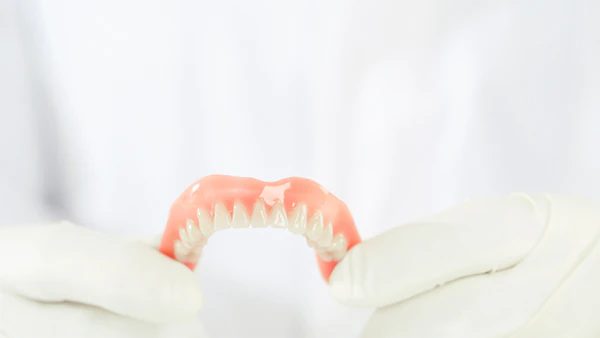
Dentures are removable dental appliances designed to replace multiple missing teeth or an entire arch of teeth.
Depending on how many teeth you're missing, you may receive a partial denture or a complete denture. Partial dentures replace some missing teeth while fitting around your remaining natural teeth. Complete dentures replace all the teeth in the upper or lower arch.
Dentures can restore your ability to eat and speak and can also support the appearance of your face and smile after tooth loss. They are removable, which means you take them out for cleaning and typically while you sleep.
At Dat Complete Dentistry, removable dentures are custom-crafted to fit each smile. We offer several denture options, including immediate dentures, partial dentures, complete dentures, and flipper options.
What Are Dental Implants?
Dental implants are a tooth replacement option designed to replace not only the visible portion of a missing tooth, but also its root.
A small titanium implant is surgically placed into the jawbone. Over time, the implant can integrate with the surrounding bone through a process called osseointegration. Once the implant has stabilized, it can support a dental crown, bridge, or denture.
This makes dental implants different from traditional dentures. Instead of simply resting on the gums, an implant is anchored within the jawbone.
At Dat Complete Dentistry, dental implants can be used to replace individual teeth or support larger restorations. We offer conventional dental implants as well as All-on-4®, mini implants, hybrid full-arch solutions, overdentures, and implant-retained dentures.
Dentures vs. Dental Implants: What's the Difference?
Both dentures and dental implants can restore missing teeth, but they work differently.
Dentures
- Removable from the mouth
- Can replace several teeth or an entire arch
- Typically don't require surgical placement
- Often have a lower initial cost than implant treatment
- May require adjustments or replacement as the mouth changes over time
- Can take some time to feel natural and comfortable
- May become less stable as the gums and underlying bone change
Dental Implants
- Surgically anchored into the jawbone
- Can replace one tooth or support multiple replacement teeth
- Designed to provide stability during chewing and speaking
- Can help maintain the jawbone around the implant
- Require a healing period for the implant to integrate with the bone
- May involve a higher initial investment and a longer treatment process
- Can support crowns, bridges, or implant-retained dentures
Neither option is automatically appropriate for every patient. A dental evaluation is necessary to determine which solutions are realistic for your particular situation.
When Might Dentures Be a Good Option?
Traditional dentures may be worth considering if you are missing many or all of your teeth and want a removable solution. Dentures may be right for you if:
You Need to Replace Many Teeth
If several teeth need to be replaced, a partial or complete denture can restore an entire section of your smile without requiring an individual restoration for every missing tooth.
You Prefer a Removable Restoration
Some patients prefer having a restoration they can remove for cleaning or other reasons. Dentures are designed to be removed and cleaned outside of the mouth.
You Want a More Accessible Initial Treatment
Treatment costs vary considerably based on the number of teeth being replaced and the type of restoration needed. In general, traditional dentures can have a lower initial cost than comprehensive implant treatment.
However, it's important to look at the long-term picture rather than considering only the initial price. Dentures can require adjustments, relining, repairs, or replacement as your mouth changes.
You Aren't a Candidate for Traditional Implant Placement
Some patients may not have enough available bone for conventional implant placement without additional treatment. Bone grafting may sometimes make implant placement possible, but not every patient will want or be a candidate for additional surgical procedures.
Your dentist can evaluate your bone structure and overall oral health before recommending an implant-based treatment plan.
When Might Dental Implants Be a Good Option?
Dental implants are worth considering if you want a stable, long-term tooth replacement and are a suitable candidate for implant treatment. They may be particularly useful if:
You're Missing One Tooth
A single dental implant can replace an individual missing tooth with an implant-supported crown. Unlike a traditional bridge, an implant does not need to be anchored to neighboring natural teeth.
You're Missing Several Teeth
Multiple implants can support an implant bridge or other multi-tooth restoration. The number and placement of implants depend on your specific anatomy and treatment plan.
You Want a More Stable Alternative to Traditional Dentures
Implants don't necessarily mean you have to replace dentures entirely. They can also be used to stabilize them.
Implant-retained dentures attach to implants placed in the jaw, providing additional stability compared with a traditional removable denture. Dat Complete Dentistry offers implant-retained dentures, overdentures, and hybrid full-arch solutions.
You Want to Help Preserve Jawbone
When a natural tooth is lost, the bone surrounding that tooth no longer receives the same stimulation and can gradually resorb. Because an implant is anchored in the jawbone, it can provide stimulation to the surrounding bone and help maintain bone in that area.
What About Implant-Supported Dentures?
If you're trying to decide between dentures and dental implants, there's an important third option to consider: implant-supported dentures. This approach combines elements of both treatments.
Instead of a denture simply resting on the gums, dental implants provide anchors for the denture. Depending on the design, the denture may snap onto implants and remain removable, or a fixed restoration may be secured to the implants and only removed by a dental professional. Implant-supported dentures can provide greater stability while still replacing multiple missing teeth at once.
At Dat Complete Dentistry, patients can choose from implant-retained dentures, overdentures, hybrid full-arch restorations, and All-on-4® solutions.
What Should You Consider When Choosing Between Dentures and Implants?
There are several factors your dentist will consider when developing a tooth replacement plan.
1. How Many Teeth Are Missing?
Replacing one missing tooth is different from replacing an entire arch.
A single missing tooth may be treated with an implant-supported crown, while someone who has lost most or all of their teeth may benefit from a denture, implant-supported denture, or full-arch implant solution.
2. Your Jawbone Health
Dental implants require adequate bone structure for proper support. If you've experienced significant bone loss after tooth loss or periodontal disease, your dentist may need to evaluate whether bone grafting or another approach is appropriate. Dat Complete Dentistry uses CBCT 3D imaging to provide a detailed view of the teeth and jaw and assist with implant planning.
3. Your Overall Oral Health
Healthy gums and good oral hygiene are important for successful tooth replacement. Active dental infections, untreated gum disease, or other oral health concerns may need to be addressed before certain restorative treatments. Dr. Dat Vu will evaluate your overall oral health to help select the best treatment plan for your smile.
4. Your Timeline
Dentures can often provide a relatively straightforward way to replace missing teeth, while dental implants involve a surgical procedure and a healing period.
The implant itself needs time to integrate with the jawbone before the final restoration is placed. This process can take several months, although the exact timeline varies from patient to patient.
If you're looking for a faster way to restore your smile, your dentist can explain whether an immediate denture or another temporary restoration may be appropriate while you determine your long-term treatment plan.
5. Your Budget and Financing Options
Cost is an important part of any treatment decision. Dentures and implants have different upfront costs, and the total cost of implant treatment depends on factors such as the number of implants, the type of restoration, whether bone grafting is needed, and other aspects of your treatment plan.
It's also important to consider long-term maintenance and potential replacement when comparing treatment costs.
At Dat Complete Dentistry, Dr. Dat and his team offer flexible payment options and dental membership plans and focus on helping patients understand their treatment choices and associated costs.
6. Your Comfort and Lifestyle
Think about how you want your replacement teeth to function in everyday life. Some patients are comfortable removing and cleaning dentures. Others prefer the stability of an implant-supported restoration.
Consider questions such as:
- Do I want a removable or fixed restoration?
- How important is stability when chewing?
- Am I comfortable with implant surgery?
- How much time can I dedicate to the treatment process?
- What type of maintenance am I comfortable with?
- What foods and activities are important to me?
- What are my long-term oral health goals?
Your answers can help your dentist narrow down the options that make the most sense for you.
Can You Get Dental Implants If You Already Wear Dentures?
Yes. Wearing traditional dentures doesn't necessarily mean you have to continue wearing them indefinitely.
Dental implants can sometimes be used to stabilize an existing denture or support a new implant-retained restoration. Your dentist will need to evaluate your oral health, jawbone, current denture, and overall treatment goals to determine whether an implant-supported option is appropriate.
For patients who are frustrated by loose or unstable dentures, this can be an important option to discuss.
Dentures vs. Dental Implants: There Isn't One Right Answer
When comparing dentures and dental implants, it can be tempting to look for one universally better treatment. In reality, tooth replacement should be individualized.
Traditional dentures can provide a practical way to replace several or all missing teeth without implant surgery. Dental implants can provide a stable foundation for crowns, bridges, or dentures and may help preserve bone around the implant. Implant-supported dentures can combine the benefits of both approaches.
The best choice for you depends on your oral health, anatomy, number of missing teeth, treatment goals, timeline, budget, and personal preferences. A thorough dental evaluation is the best place to start.
Explore Your Tooth Replacement Options in Hatboro, PA
If you're missing teeth or unhappy with your current dentures, you have options.
At Dat Complete Dentistry in Hatboro, PA, Dr. Dat Vu provides a comprehensive range of restorative treatments, including removable dentures, partials, dental implants, implant-retained dentures, overdentures, hybrid full-arch restorations, and All-on-4® implant solutions. We also use CBCT 3D imaging to assist with diagnosis and implant planning.
Whether you're considering dentures, dental implants, or an implant-supported denture, the goal is the same: finding a solution that helps you restore your smile, function, and confidence while supporting your long-term oral health. Dat Complete Dentistry is located at 43 S. York Road in Hatboro, PA. Contact our office to schedule a restorative dentistry consultation and learn more about your options for replacing missing teeth.


